


Are you ending your marriage? I wish that when I was in your shoes, I had a comprehensive pre-divorce checklist PDF of what to do.
The entire process could have been much easier, saving me time, money, and, most importantly, unnecessary frustration.
That's why I created this guide—to help you prepare for divorce with greater clarity and confidence.
The sad truth is that many women approach divorce under tremendous emotional stress. And as we all know, when emotions run high, clear thinking becomes harder.
While divorce is deeply personal, its financial side deserves the same careful planning as any major business transaction. There are important steps to take, documents to gather, and decisions to understand before moving forward.
Let's walk through the seven steps to prepare for divorce, one by one.
1. Review Finances on Your Pre-Divorce Checklist PDF

Analyzing your finances is the first step of this pre-divorce checklist PDF.
Do you know your money? Who manages it? Do you see a difference between just "money" and "divorce and your money"?
Also, if you think, "I've got it all figured out," that's great. But remember, there's always room for improvement, especially when it comes to your financial well-being.
However, if you've been out of touch with your finances for the past 3-5 years, there is much work to do. But don't despair. There's a way to catch up and regain control of your financial situation.
Learn how a Certified Divorce Financial Analyst®, can help. Connect with Nella Zelensky, a CDFA®, MAFF® co-founder of Divorced Gals.
Be smart! Consider speaking with a divorce financial expert before discussing divorce with your spouse.
A CDFA® can help you:
- Identify and organize important financial information before records become harder to access.
- Understand what your financial life might look like after divorce—not just today, but 20 years down the road.
So, what should you review before divorce?
2. Budget and Expenses
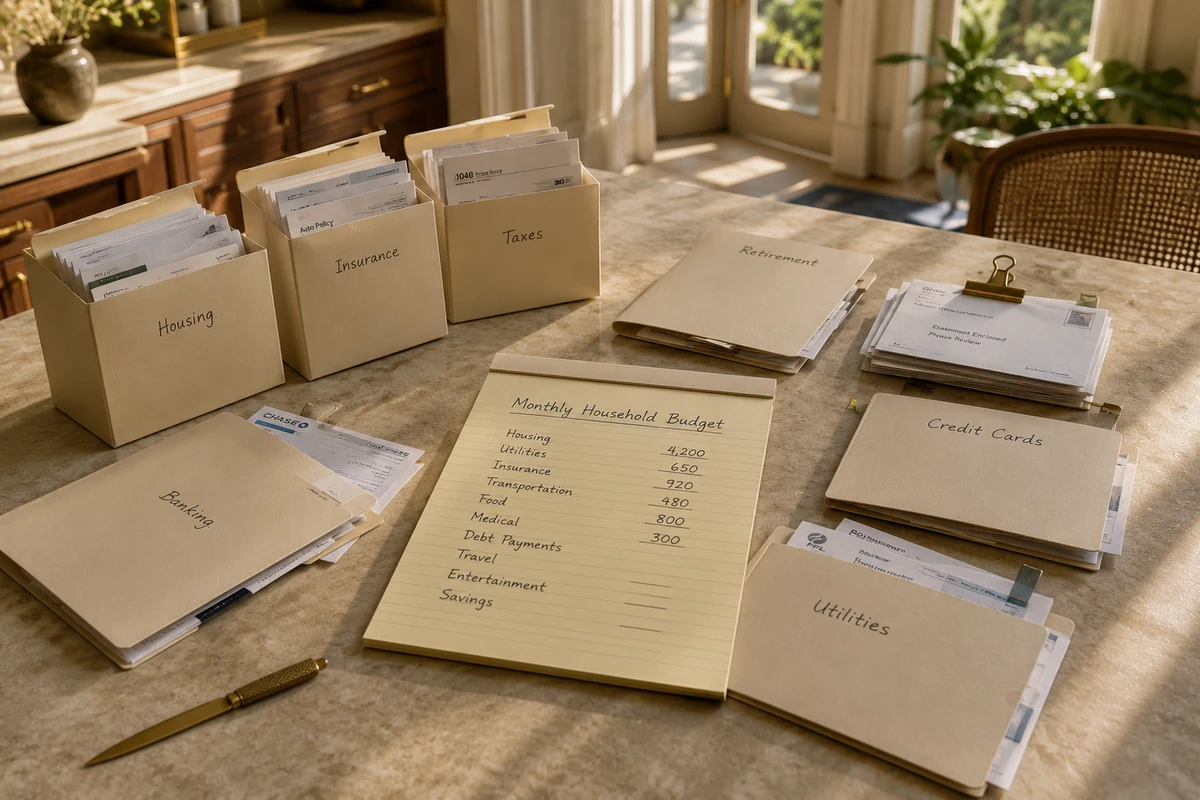
One of the most important parts of your financial review is creating a budget, which includes:
Reviewing Your Expenses and Spending Habits
1. Create categories of expenses related to your lifestyle (household, school expenses, hobbies, gifts... etc.)
2. Estimate how much you spend monthly in each category, using bank and credit card statements whenever possible. Be realistic—don't inflate or underestimate the numbers.
3. Highlight your essential expenses in green and discretionary expenses in pink. Remember, fixed expenses generally stay the same each month, while variable expenses can change. Both categories may include essential spending.
How Do You Pay Your Expenses?
How do you pay for your expenses? Cash, credit card, debit card, or personal check? Who pays for your expenses? You and your spouse only, or anyone else, like parents or friends?
Based on who pays for your expenses, you should adjust them accordingly.

Tracking Your Expenses
Now, in anticipation of significant changes in your lifestyle, it is time to have tremendous accountability for your money. How?
Start tracking your expenses regularly. It is a critical item on your pre-divorce checklist PDF, so don't procrastinate!
You can track your expenses manually, in Excel, or with budgeting apps like YNAB (You Need A Budget), Quicken Simplifi, or Monarch Money. Choose whatever works best for you.
Developing a Post-Divorce Budget
Now, you should prepare your new budget based on your current expenses. Treat it as a living document that you can adjust as your income, expenses, and priorities change.
You should have a realistic budget, which is a big part of the steps in getting divorced and, later, your post-divorce checklist.
What's next?
3. Obtain a Copy of Your Credit Report
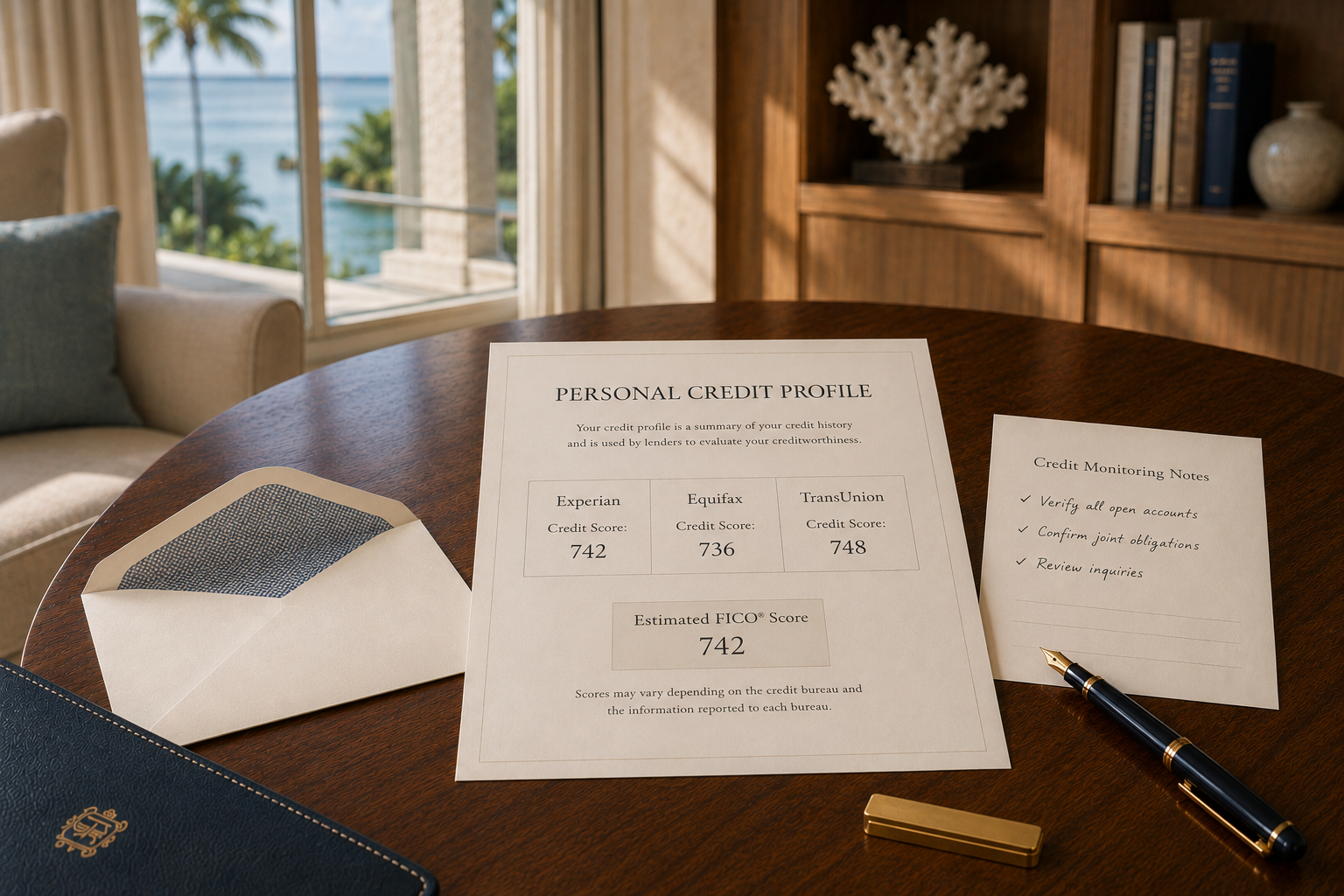
What if you or your spouse put some expenses on a credit card and don't have access to all statements? Guess how to get a record of your debts?
Obtain a copy of your credit report! It can help you identify outstanding credit accounts, debts, and payment history so you can make more informed decisions.
Don't be surprised if you find some items you forgot or some that are not yours. Also, heck for unfamiliar accounts, incorrect balances, and other reporting errors.
By the way, what is your FICO® Score? When was the last time you checked your credit?
Once you have your credit report, review it regularly. You may discover unfamiliar accounts, changes in reported balances, or debts you didn't know about. And if someone opens an account in your name without your knowledge, wouldn't you want to know?
Visit www.AnnualCreditReport.com and obtain your free credit report from all three reporting agencies. Free credit reports do not necessarily include a credit score.
My favorite tool for periodically running my credit report is www.CreditKarma.com. You can sign up for free and it is simple and intuitive.
This simple action can empower you to stay on top of your credit health.
Remember: you can't expect what you don't inspect. So it is your ultimate responsibility to protect your credit.
Now, it's time to prepare all your financial documents.
4. Gather Documents to Prepare for Divorce
As outlined in your pre-divorce checklist PDF, gathering important financial and personal documents is one of the first steps toward preparing for divorce.
Collect as much information as you can legally access and bring relevant documents to your appointment with an attorney or other divorce professional. Being organized can help you ask better questions, save time, and potentially reduce professional fees.
Below are seven categories of documents to help you get started.Pre-Divorce Documents List

Legal Documents
Important: Prenuptial agreements, postnuptial agreements, deeds, and other documents affecting property ownership or classification may be relevant to your divorce. However, the existence of a signed document does not automatically determine whether it is legally enforceable or how the property will be treated. Have a qualified Florida family law attorney review these documents.

Personal Information

Personal Finances

Investment Statements (6 months)

Real Estate Documents
Employment Documents

Business Documents
Feeling overwhelmed?
Not sure about your spouse's retirement accounts, business interests, or other financial matters?
You don't need to have every answer today. Start with the documents you already have and identify what information is still missing.
Gathering financial documents is an important step in your pre-divorce preparation. The more organized you are, the better prepared you'll be to discuss your options with your divorce professionals.
Download the complete Document Checklist below, and let us know how we can help.
5. How to Organize Divorce Paperwork for Your Pre-Divorce Checklist
Arthur ashe
-tennis star-
One important key to success is self-confidence, and the key to self-confidence is PREPARATION.
Let's keep your confidence high and get you organized. You cannot afford to drown in the ocean of emails, forms, and documents.
Hard Copy File System
When you gather your documents, keep a complete set for yourself and provide copies to your attorney and financial professional as needed. You can also share electronic copies securely instead of printing everything.
Next, place those copies in manila folders, 3-ring binders, or accordion files. Use a portable file box with a handle that holds just enough and is easy to carry around.
Keep original documents in a secure location, especially if you still live with your spouse. If you're unsure where to store them safely, discuss your options with your attorney.
Electronic File System
Next, create electronic copies of your important documents and store them in a secure, password-protected location. If you share files with your attorney or financial professional, use their recommended secure document-sharing system.
Additionally, use strong, unique passwords and enable two-factor authentication whenever available. Avoid storing sensitive documents on shared devices or accounts your spouse can access.
For electronic communication, create a new email account that you will use only for your divorce process. Be sure your spouse or children cannot guess your new email password.
Divorce File Categories

The following are the categories of your Divorce File:
Category 1
Pleadings or other documents filed with the court.
Category 2
Court orders with dates, rulings to motions filed, or tasks to be done by specific dates.
Category 3
Discovery and documents filed by you or on you.
Category 4
Correspondence
Category 5
Miscellaneous
Lastly, ask your attorney for copies of important court filings, correspondence, discovery requests, and responses. Keep them organized so you have a complete record of your case.
But are there different methods of divorce?
6. Research Divorce Alternative Solutions

As a part of your pre-divorce checklist, the next step is to decide HOW to get a divorce. There are various methods, and each has its pros and cons.
Different Ways to Divorce
There are different ways to divorce. Some couples resolve their differences outside the courtroom, while others need a judge to make decisions.
Alternative Dispute Resolution (ADR) offers several ways to resolve divorce disputes without a traditional court trial.
Let's look at four options:
How to Decide on a Method of Divorce
It largely depends on the relationship between you and your spouse:
- Do you worry about your or your children's safety?
- Is your spouse interfering with your access to enough cash?
If you answered “yes” to either question, speak with a qualified family law attorney before deciding how to proceed.
If, on the other hand, you and your spouse can be amicable, you might do it yourself. Of course, just because you both are getting along now doesn't guarantee an amicable situation tomorrow.
Of course, before this step of your pre-divorce checklist, you might consider pre-divorce counseling. It is a part of Divorce 101.
CDFA® as a Financial Neutral for Amicable Couple
What if you and your spouse are amicable and have more complex finances?
In this case, you should consider the help of a CDFA® as a "financial neutral." They will review your finances and craft a fair settlement. Then, a legal document preparer will do the rest.
You and your spouse will work through your divorce settlement together and can remain friends after a divorce. Additionally, you will save tons of money on legal fees.
Of course, whatever you decide is subject to your state-specific divorce rules and regulations.
And now... the biggest elephant in the room...
7. How Do I Prepare My Husband For Divorce?

Breaking the news to your husband that you want a divorce can be scary and emotionally charged.
Remember, divorce is not just an emotional decision. It is also a financial transaction. As difficult as it may be, try to stay calm and think about the financial consequences, not just your emotions.
The conversation will probably be one of the most uncomfortable you'll ever have. If you feel safe doing so, have the divorce talk face-to-face rather than delivering the news through an email, text message, relative, or friend.
But here's something equally important.
After breaking the news, give your spouse some breathing room. You cannot predict how someone will react, and pushing for immediate answers or decisions may only make things worse. Your husband may need time to process what you've said.
A little wisdom: If tensions are running high, consider whether staying somewhere else temporarily makes sense. Before voluntarily leaving the marital home, speak with a family law attorney about possible legal or financial consequences.
If you have children, plan the conversation for a time when they are not present. A visit with grandparents or a sleepover with friends may give both of you the privacy you need.
One important exception: If you have concerns about your safety or fear an aggressive reaction, do not insist on a face-to-face conversation. Prioritize your safety and seek professional guidance before deciding how to proceed.
Remember: How you handle yourself during divorce can make a real difference in how you navigate the process.
8. Pre-Divorce Checklist FAQ

1. Review your finances before divorce.
2. Create a budget and track your expenses
3. Obtain your credit reports and review them regularly.
4. Gather important financial and personal documents.
5. Organize your divorce paperwork (hard copies and electronic files).
6. Research alternative divorce solutions.
7. Prepare to talk to your spouse about divorce.
- Don't make decisions emotionally. Think financially! Divorce is a business transaction.
- Don't discuss your divorce plans or financial matters on SOCIAL MEDIA. Keep your private business private!
- Don't try to hide money. It might hurt your case.
- Don't go on a shopping spree if it doesn't really benefit your spouse - you can be accused of wasting marital assets.
- Don't bully or try to scare your spouse
1. Think carefully about when and how to tell your children about the divorce. Keep the conversation age-appropriate and reassuring.
2. Consider consulting a child psychologist or family therapist for guidance on talking to your children and helping them adjust during and after divorce.
3. If it's safe to do so, discuss a parenting plan with your spouse that puts your children's best interests first. If you anticipate disagreements, consult a family law attorney.
4. Gather important information about your children, including school contacts, class schedules, extracurricular activities, medical records, and child-related expenses.
1. This is for women who are considering divorce but haven't made a final decision. We can explain that preparation can begin before filing, particularly when organizing finances and gathering documents.
1Yes, it's often a smart move. Consulting a family law attorney before telling your husband about divorce can help you understand your legal rights, financial obligations, and potential risks.
This is especially important if you have children, complex finances, or concerns about your safety.
Remember, consulting an attorney doesn't mean you're ready to file for divorce. It simply means you're preparing to make informed decisions.
9. Final Thoughts: Are You Ready for Divorce?
Now you know some of the important steps to take if you decide to get divorced.
Are you ready?
It's natural to feel emotional and uncertain about what comes next. After all, uncertainty is often one of the hardest parts of divorce. That's why having a plan matters.
This pre-divorce checklist PDF can help you prepare, stay organized, avoid unnecessary mistakes, and potentially save time and money along the way.
Remember, divorce is not just an emotional experience. It is also a financial transaction. And while emotions will inevitably play a role, the decisions you make today can shape your financial future for years to come.
So take your time. Ask questions. And make informed decisions.
Now, there's one thing left to do: download your free pre-divorce checklist PDF and let us know how we can help.
You may not get a second chance to negotiate your divorce settlement. Make your decisions count.
For the life you're building,
Nella Zelensky
About the Author
Facing her own divorce, Nella discovered firsthand how overwhelming financial decisions can become—even with a background in finance. That experience inspired her to focus on divorce financial analysis. Building on an established career in finance, she earned the Certified Divorce Financial Analyst® (CDFA®) designation, followed by the Master Analyst in Financial Forensics® (MAFF®) credential.
Today, as Co-Founder of The Divorced Gals, Nella helps women understand the financial consequences of divorce, ask better questions, and make decisions with greater clarity and confidence.