


Some decisions feel financial. Others feel deeply personal. Asking, “Can I afford to keep the house after divorce?” is often both.
There is a moment that many women experience during divorce that rarely makes its way into conversations with attorneys or financial professionals.
For many women, the family home is far more than a financial asset. It’s where children were raised, holidays were celebrated, and countless ordinary moments quietly became lasting memories. Deciding whether to keep the house can feel like deciding whether to hold on to a part of your life.
Those emotions are real, and they deserve to be acknowledged.
But alongside the emotional decision is another question—one that is often far more difficult to answer.
Can I truly afford to keep the house after divorce?
The answer involves much more than the mortgage payment. It requires understanding the long-term financial responsibilities, the opportunities you may gain—or give up—and how this decision could shape your financial future for years to come.
It's about helping you decide whether you can afford to keep the house after divorce.
But first, a few basics…
1. Why So Many Women Want To Keep the House After Divorce?
If you've found yourself wondering, "Can I keep the house after divorce?" you're certainly not alone.
For many women, keeping the family home isn't really about the house at all.
It's not about the investment or whether the property will increase in value. It's about everything the home has come to represent.
The comfort of familiar surroundings.
Keeping your children's routines as unchanged as possible.
Knowing where the holiday decorations are stored, which cabinet holds the coffee mugs, and how the afternoon sunlight fills the kitchen.
Those details may seem ordinary.
During divorce, they rarely feel that way.
The home also holds something no appraisal can ever measure.
Your memories.
Your routines.
Your identity.
If this is how you feel, there is nothing irrational about it.
In fact, it's one of the most common emotions women experience during divorce.
The challenge isn't choosing between your heart and your finances.
It's making sure they have an opportunity to work together.
Because that's where clarity begins.
2. Can I Afford to Keep the House After Divorce? Understanding the Costs
Before looking at the hidden costs of keeping a home, it's worth asking a simple question.
What expenses immediately come to mind when you think about owning your house?
For most women, the answers are almost automatic. The monthly mortgage payment. Property taxes. Homeowner’s insurance. Utilities. HOA fees. Routine maintenance. Home repairs…
Then there are the everyday expenses that quietly become part of homeownership—replacing worn furniture, maintaining the landscaping, keeping the house clean, and covering the countless little things that somehow always need attention.
None of these costs are surprising.
In fact, they're exactly the expenses most women consider when asking themselves, “Can I afford to keep the house after divorce?”
But what if those aren't the expenses most likely to affect your financial future?
That's where the conversation begins to change.
3. The Hidden Costs of Keeping the House After Divorce
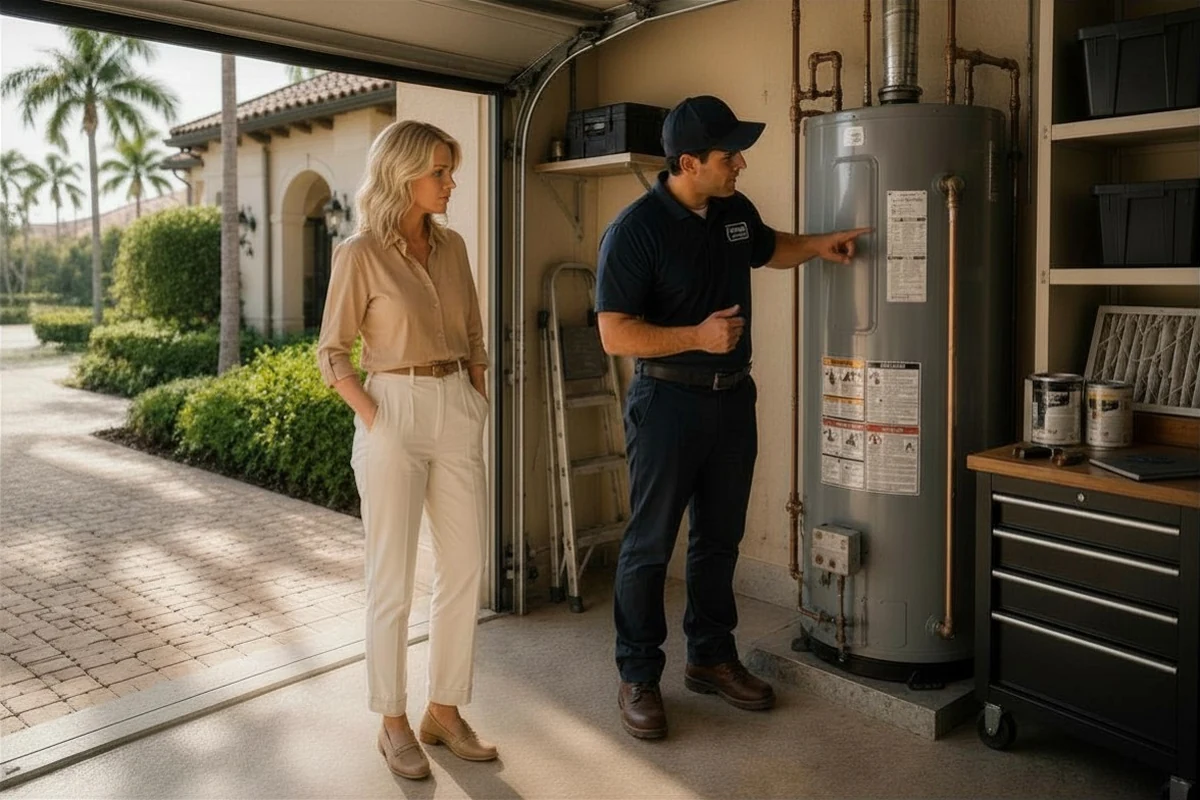
By now, you've probably added up the obvious expenses.
But here's another question worth asking.
What happens when your house needs something you weren't planning for?
Most homeowners don't worry about replacing the roof every month.
Or installing a new air conditioning system.
Or paying a hurricane deductible after a major storm.
Those expenses stay in the background—until suddenly they don't.
- Insurance and assessments: Unexpected increases in flood insurance premiums or special HOA assessments.
- Equipment and appliances: Pool equipment, refrigerators, and air conditioning systems that suddenly need replacing.
- Unexpected repairs: Plumbing leaks, electrical problems, and termite treatment.
- Exterior maintenance: Fresh exterior paint and tree removal.
None of these expenses is unusual.
In fact, if you own a home long enough, chances are you'll experience several of them.
The challenge is that they rarely happen one at a time.
They tend to arrive when your emergency savings are already being stretched, or when life presents another unexpected challenge.
THE COST OF OWNERSHIP
It's about whether you can comfortably absorb the unexpected without putting your long-term financial security at risk.
That's why answering the question “Can I afford to keep the house after divorce?” involves much more than the monthly mortgage payment.
Because sometimes it's not the mortgage that changes the decision.
It's everything else that comes with it.
4. Opportunity Cost of Keeping a House After Divorce

Before answering “Can I afford to keep the house after divorce?” there's another question worth asking.
What else could that money be doing for you?
Most homeowners naturally focus on the cost of keeping a home. Mortgage payments, insurance premiums, property taxes, and maintenance are all easy to recognize. But there's another cost that isn't nearly as visible.
Financial planners call it opportunity cost—the value of what you give up when your money is committed to one choice instead of another.
Every dollar tied up in your home is a dollar that isn't readily available to invest somewhere else.
It can't be invested for retirement, strengthen your emergency reserves, reduce debt, help fund future healthcare expenses, education, vocational advances or provide the financial flexibility that often becomes so important after divorce.
Of course, that doesn't automatically mean keeping the house is the wrong decision.
It simply means every financial decision deserves to be viewed from more than one perspective.
Yes, your home may continue to appreciate over time, and that appreciation may become an important part of your long-term wealth.
But appreciation doesn't pay monthly bills. It doesn't replace a broken air conditioner or cover an unexpected medical expense when cash is suddenly needed.
Wealth on paper.
Cash flow in real life.
Both matter.
But only one helps you pay next month's bills.
So, what happens after the papers are signed?
5. What Happens Five Years After Keeping the House?
THREE PATHS FOR YOUR NEXT CHAPTER
Your Home. Three Possible Paths.



No one knows exactly what life will look like five years after divorce.
But before answering the question “Can I afford to keep the house after divorce?” it's worth considering more than one possible future.
Scenario A: Everything Goes According to Plan
Your income remains stable.
The housing market continues to grow.
The home appreciates in value, major repairs are minimal, and your monthly budget comfortably covers your expenses.
Five years later, you're grateful you kept the house.
It provided stability when you needed it most, and financially, the decision worked out exactly as you hoped.
Scenario B: Life Becomes More Expensive
Your income doesn't increase as quickly as you expected.
Property taxes rise.
Insurance premiums climb.
The air conditioner needs replacing, followed by a new roof a year later. Little by little, your emergency savings begin to disappear—not because of one disaster, but because of a series of ordinary expenses.
The house is still yours.
But the financial comfort you hoped it would provide slowly begins to fade.
Scenario C: Life Doesn't Follow the Plan
Then life throws you something you never expected.
A health issue.
A job loss.
A major repair.
Suddenly, everything changes.
Instead of selling the house because you want to, you're forced to sell because you have to—and the market happens to be down.
The decision you once believed would give you security suddenly leaves you with fewer options.
None of these scenarios is meant to predict your future.
They're meant to remind us that financial decisions aren't made for the life we hope will happen.
Financial decisions aren't made for the life we hope will happen.
They're made for the life that may happen.
6. Children Eventually Leave the Family House

When asking yourself, “Can I afford to keep the house after divorce?” there's another question that often doesn't get asked until much later.
Who do you imagine living there five or ten years from now?
For many parents, one of the biggest reasons for keeping the family home is simple: they want their children to experience as little disruption as possible.
That's a loving instinct. And for many families, it may be exactly the right decision.
But children grow up.
They leave for college.
They begin careers.
They start families of their own.
One day, the bedrooms that once felt too small become guest rooms. The kitchen that once buzzed with activity grows quieter. The house remains the same, but daily life slowly changes.
The mortgage is still there.
So are the property taxes.
The insurance premiums.
The maintenance.
The repairs.
The responsibilities of owning a home don't leave simply because your children do. But the memories remain just as meaningful.
It simply means the reasons for keeping the house may change over time. And as difficult as it may be to ask, it's worth considering another question.
Will this home continue to support your lifestyle... even after your children start their own lives?
Sometimes the answer is yes.
Sometimes it isn't.
What will it be for you?
BEFORE YOU CONTINUE
Every family's financial circumstances are unique. The examples throughout this article are intended to illustrate common financial situations—not to recommend one solution over another. The decision to keep or sell a home should always be evaluated in light of your own financial resources, long-term goals, and personal priorities. The goal isn't to find the answer that worked for someone else. It's to discover the answer that's right for you.
7. Questions Worth Asking Yourself
By now, you may have noticed that this article hasn't tried to tell you whether you should keep your home.
That isn't its purpose.
Its purpose is to help you ask the questions that matter before making one of the biggest financial decisions you'll make during your divorce.
So before answering “Can I afford to keep the house after divorce?” give yourself permission to slow down for a moment.
And simply ask...

If I were buying this home today, would I still choose it?

If this house held no memories, would I see it differently?

Am I choosing this home because it supports my future—or because it reminds me of my past?

How much financial freedom would I be giving up by keeping it?

Would I sleep better in this house... or simply worry in a different one?

Five years from now, what decision do I hope I'll be grateful I made today?
There are no universally right answers.
Only the answers that are right for your life.
Sometimes clarity comes from finding an answer.
More often...
It begins with asking the right questions.
8. Keeping the House Is Sometimes the Right Decision

After everything we've discussed, you may be wondering...
So, can I afford to keep the house after divorce?
The honest answer is...
Sometimes, yes.
For many women, keeping the family home can be an excellent decision if it supports both today's lifestyle and tomorrow's financial security.
Imagine this example.
Susan is 58 years old and recently finalized her divorce. She earns a stable salary and receives investment income that helps support her living expenses. Her mortgage is nearly paid off, property taxes and insurance fit comfortably within her monthly budget, and she has a fully funded emergency reserve.
She continues saving for retirement and doesn't need to tap into her home equity to cover everyday expenses.
In Susan's situation, keeping the house may make excellent financial sense.
Now compare that to someone with a very different financial picture.
If keeping the home means depleting emergency savings, postponing retirement contributions, carrying significant debt, or struggling to meet monthly expenses, the same decision may lead to a very different outcome.
The house hasn't changed.
The financial circumstances have.
That's why there is no universal answer.
The right decision isn't determined by the size of the home, the neighborhood, or even the memories it holds.
It's determined by whether the home fits comfortably within your financial reality.
Because when your finances support your decision...
Your decision is far more likely to support your future.
DIVORCED GALS · HOUSE OPTIONS ANALYSIS™
Before You Decide...
Keeping the house, selling it, or exploring co-ownership? Understand what each option could mean for your financial future.
Affordability
Future Cash Flow
Retirement Impact
Opportunity Cost
Long-Term Flexibility
Emergency Reserves
9. Clarity Creates Better Decisions

If you began reading this article asking, “Can I afford to keep the house after divorce?” one thing may be becoming clear.
This article was never really about a house.
It was about understanding the life that comes after the house.
Whether you ultimately decide to keep your home or sell it isn't what determines the quality of your financial future.
What matters is whether that decision reflects your long-term goals, your financial resources, and the life you want to build after divorce.
For some women, keeping the house will provide stability, confidence, and lasting financial security.
For others, letting it go will create new opportunities, greater flexibility, and the freedom to move forward without unnecessary financial pressure.
Neither decision is better.
The better decision is the one that allows your finances to support the life you truly want to live.
Because that's what financial planning is really about.
Frequently Asked Questions
Start with your post-divorce income and a realistic monthly budget. Include the mortgage, property taxes, insurance, utilities, maintenance, and a reserve for unexpected repairs.
Then consider what remains for retirement savings, emergencies, and everyday living. Being able to make the mortgage payment doesn't necessarily mean you can comfortably afford the house.
Not necessarily. It depends on your existing loan, the divorce agreement, and whether your lender permits another arrangement, such as an assumption or release of liability.
But remember: Removing your former spouse from the deed does not automatically remove them from the mortgage. Before agreeing to keep the home, understand exactly how the loan will be handled and who remains responsible for repayment.
Neither option is automatically better.
Keeping the house may provide stability and allow you to benefit from future appreciation. Selling may free up equity, reduce ongoing expenses, and give you greater financial flexibility.
The important comparison isn't simply what the house is worth today. It's how each option affects your cash flow, savings, retirement, and long-term financial security.
Possibly. Some divorcing couples agree to postpone selling the family home, particularly when children are involved.
In Florida, courts may also consider allowing a parent to remain in the marital home when doing so serves a dependent child's best interests and maintaining the property is financially feasible.
Any arrangement should clearly address the mortgage, property expenses, repairs, ownership responsibilities, and what happens when the agreed period ends.
That's an important warning sign.
Home equity adds to your net worth, but it doesn't automatically provide the cash needed to pay bills. Accessing that equity may require borrowing against the home or selling it, and borrowing introduces additional costs and risks.
When asking yourself, “Can I afford to keep the house after divorce?” consider whether your ongoing income can support the property without putting your emergency savings or retirement at risk.
Focusing on the mortgage payment while overlooking the full cost of ownership—and what you may have to give up financially to keep the home.
A house can be affordable today but become difficult to maintain when insurance premiums increase, major repairs arise, or income changes.
The goal isn't simply to keep the house. It's to make sure keeping it doesn't compromise the financial future you're trying to build.
One Final Thought...
The family home may become part of your next chapter.
Or it may become part of the chapter that came before it.
Neither outcome defines your future.
The decision itself matters. But even more important is understanding what that decision means for your finances, your lifestyle, and the life you hope to build after divorce.
Because that's what this journey is really about.
Not choosing a house.
Choosing a future.
And when you're asking, "Can I afford to keep the house after divorce?" remember that the best decision isn't always the easiest one. It's the one made with clarity, a full understanding of your options, and the confidence to move forward.
For the life you're building,
Nella Zelensky
About the Author
Facing her own divorce, Nella discovered firsthand how overwhelming financial decisions can become—even with a background in finance. That experience inspired her to focus on divorce financial analysis. Building on an established career in finance, she earned the Certified Divorce Financial Analyst® (CDFA®) designation, followed by the Master Analyst in Financial Forensics® (MAFF®) credential.
Today, as Co-Founder of The Divorced Gals, Nella helps women understand the financial consequences of divorce, ask better questions, and make decisions with greater clarity and confidence.